Thursday, 15 January 2015

Punk

Punk
 

The Punk started in mid-1970's in USA, England and Australia. This movement influenced many youngsters. Famous bands at that time were: Sex Pistols, Ramones and The Clash. Later on, Punk spread around the world not only in music but in fashion, visual art, literature, dance and film.


Other bands which weren't so famous such as: The Heartbreakers, Blondie and Talking Heads became popular after playing regularly at CBGB. The term: Punk Rock was used for the rock and roll garage musicians.


SexPistols


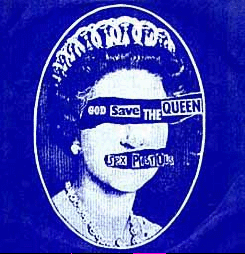
Jamie Reid promoted the posters of Sex Pistols. In the 1970's, he created many different images for the band. One of his posters is the one of God save the Queen which is below. It created a shock, because Jamie Reid used a photo of the Queen and covered her eyes and mouth which is very rude and was not permitted to do such thing. Yet, the song became one of the greatest hits in Britain and it also helped the Punk movement to go further on. He used Ransom note style to replace the eyes and the mouth.


The second picture shown below is made of fluorescent yellow ink. The design caused controversary as it did not have an image and because of the title.


savethequeensex pistols 1

“The history of the punk aesthetic cannot be told, only shown.”


In the 70's in England, problems in society were present such as:
High Unemployment
General feeling of disillusionment
Sense of boredom
No hope for the future attitude
Rebellion


Some of the clothing and accessories were: cut and torn pants and shirts with paint or marker on, safety pins, bombastic hairstyles, make-up and razor blades as jewellery.


As in Graphic design, punks used to make pages crudely, graffiti-like insertions, misspelled sentences and letters torn from different pages. Signs and symbols are susceptible to being converted into the opposite of what they mean. Similar to Dada, it was created to subvert mainstream culture but inadvertently became mainstream itself.


Bibliography:

Arts London News | The art of punk movement. 2014. Arts London News | The art of punk movement. [ONLINE] Available at: http://www.artslondonnews.com/2012/11/22/the-art-of-punk-movement/. [Accessed 31 December 2014].
 
Lecture notes.

Punk. 2015. Punk. [ONLINE] Available at: http://www.designhistory.org/PostModern_pages/Punk.html. [Accessed 03 January 2015].
 
ART FOR A CHANGE - Punk Rock Album Cover Art - SEX PISTOLS. 2015. ART FOR A CHANGE - Punk Rock Album Cover Art - SEX PISTOLS. [ONLINE] Available at: http://www.art-for-a-change.com/Punk/punka1.htm. [Accessed 03 January 2015].

How Punk changed Graphic Design | Type Tasting. 2015. How Punk changed Graphic Design | Type Tasting. [ONLINE] Available at: http://typetastingnews.com/2013/10/24/how-punk-changed-graphic-design/. [Accessed 04 January 2015].

Tuesday, 30 December 2014

De Stijl

De Stijl
 
De Stijl started in 1917 and it originated from Theo Van Doesburg. It consist of geometric
shapes and primary colours. The artists had innovative ideas and with their combination, they created the ideal fushion of form and function. They made, paintings, sculptures, typography, music and literature.

 Some of De Stijl characteristics are: simplicity, abstraction, harmony and order. The word ''De Stijl,'' means style in Dutch. In 1920's, some artists were inspired from Dada movement. The leader was Theo van Doesburg.
De Stijl has some elements from Cubism, such as the geometric forms.
De Stijl was also knows as Neo-Plasticism.


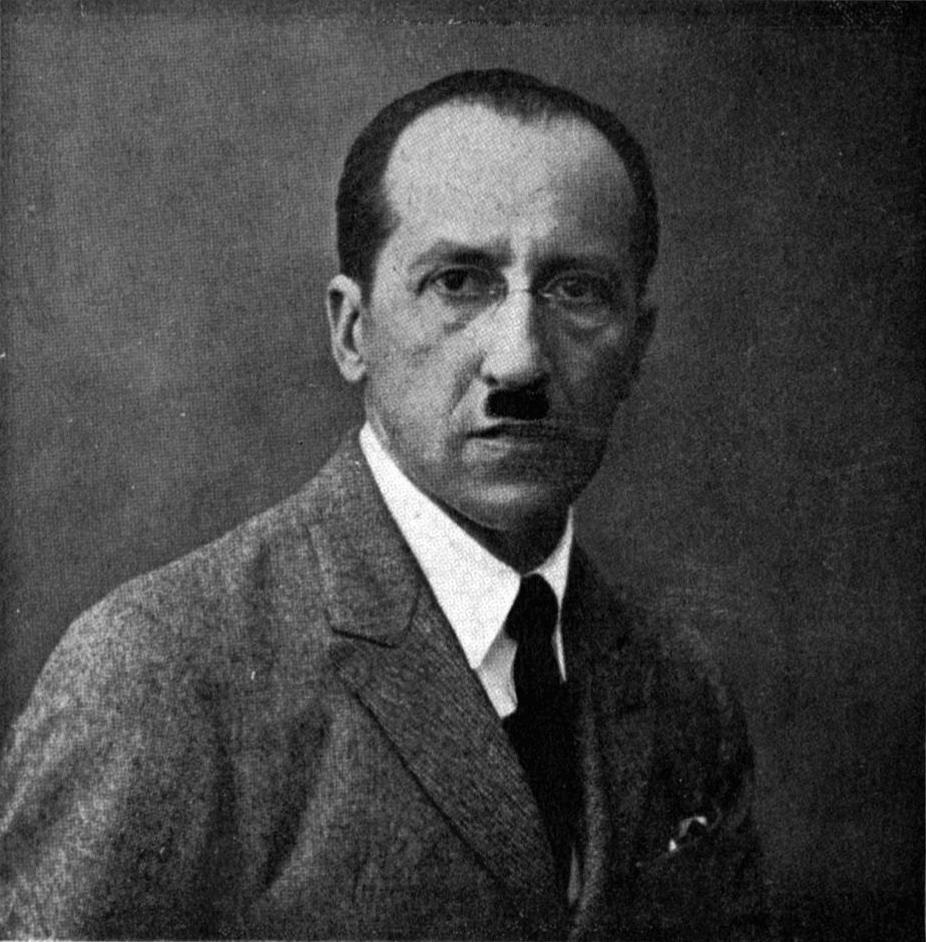
                                         A 1921 painting by Piet Mondrian


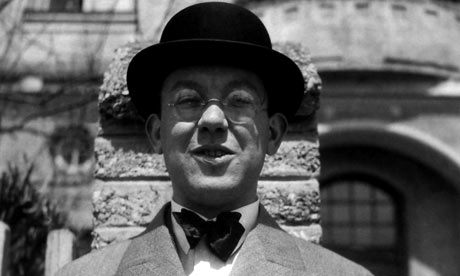
Theo Van Doesburg

Theo van Doesburg was one of the most popular De Stijl artists, he was an architect, painter, designer and writer. He was in military in 1903. In 1916 he painted some Impressionist landscapes which were inspired from the style itself. In 1914, the inspirations from Kandinsky were clear. His paintings have horizontal and vertical shapes with primary colours. Van Doesburg was also involved in Dadaism, Suprematism, Constructivism, Neo-plasticism and Elementarism.

He was inspired by Cubism. Doesburg and Mondrian co-founded the De Stijl which was made up of illustrations and articles about ideals of artists. The primary goal was to create simplicity and abstraction. A new alphabet was formed in 1919 which was later rendered digitally which is a geometric sans-serif typeface.

In 1924, Doesburg started to set his compositions to 45 degrees to the vertical. This showed that he was more concerned how the painting looked rather than the theory behind it.


Piet Mondrian

Piet Mondrian is a Dutch painter and is one of the founders of De Stijl movement. He is mostly known for his abstraction. He uses asymmetrical balance and simplification. These elements were crutial for the development of modern art. Mondrian used vertical and horizontal lies which represented the positive and the negative, the masculine and the feminine.

His paintings were influenced in other art movements too such as Luminism, Impressionism and Cubism. His work was referenced by the Bauhaus from the simplified lines and colours.


Today's technology goes back to De Stijl's characteristics itself because it has minimal, simplicity and the use of grids.


Bibliography:

De Stijl Movement, Artists and Major Works | The Art Story. 2014. De Stijl Movement, Artists and Major Works | The Art Story. [ONLINE] Available at: http://www.theartstory.org/movement-de-stijl.htm. [Accessed 09 December 2014].

A brief visual history of the utopian De Stijl movement. 2014. A brief visual history of the utopian De Stijl movement. [ONLINE] Available at: http://99designs.com/designer-blog/2012/12/18/know-your-design-history-the-utopian-de-stijl-movement/. [Accessed 11 December 2014].


MoMA | The Collection | Theo van Doesburg (Christian Emil Marie Küpper) (Dutch, 1883–1931). 2014. MoMA | The Collection | Theo van Doesburg (Christian Emil Marie Küpper) (Dutch, 1883–1931). [ONLINE] Available at: http://www.moma.org/collection/artist.php?artist_id=6076. [Accessed 26 December 2014].
Theo van Doesburg | biography - Dutch artist | Encyclopedia Britannica. 2014. Theo van Doesburg | biography - Dutch artist | Encyclopedia Britannica. [ONLINE] Available at: http://www.britannica.com/EBchecked/topic/167638/Theo-van-Doesburg. [Accessed 26 December 2014].

Theo Van Doesburg: Dutch Abstract Painter, Founder of De Stijl. 2014. Theo Van Doesburg: Dutch Abstract Painter, Founder of De Stijl. [ONLINE] Available at: http://www.visual-arts-cork.com/famous-artists/theo-van-doesburg.htm. [Accessed 29 December 2014].

Piet Mondrian Biography, Art, and Analysis of Works | The Art Story. 2014. Piet Mondrian Biography, Art, and Analysis of Works | The Art Story. [ONLINE] Available at: http://www.theartstory.org/artist-mondrian-piet.htm. [Accessed 30 December 2014].

Tuesday, 9 December 2014

Surrealism

Surrealism

Surrealism started in 1924 in Paris and it emerged from Dada. It was an international and political movement. Andre Breton was one of the surrealist artists and he was inspired from Sigmund Freud. By doing like Freud used to do, Breton and other artists such as: Louis Aragon, Paul Eluard and Philippe Soupault, these artists' poetry was surprising. Max Ernst and Andre Masson were the first people to use the techniques of Surrealism. The style itself wasn't concerned to be aesthetically pleasing but more about the way of thinking and feeling.  


Salvador Dali was born in Spain in 1904 and he was mostly known for his technical skill in painting and for his vast imagination. In 1929 he joined the Surrealist movement. He was another famous Surrealist artist who moved to Paris in 1929 and made his first paintings. He uses symbols such as ants, to symbolize sexual desire.


Uncanny: Surrealism and Graphic Design was the first exhibition that Graphic Design got influences from Surrealism. The exhibition featured: posters, books, magazines and record covers. The influences started from 1930's till this very day.

Uncanny


Surrealism affected society by some of the painters' works. The paintings showed emotion and symbolism. In the 20th century, it was the most influential movement.

Some of the characteristics of Surrealism were: inspiration of Freud, dream is a form of reality, to interpret images of sexuality and violence, socially acceptance and traditions, 19th century influences by poets, strange, ambiguous, mysterious and uncensored.
Andre Breton was another famous Surrealist artist, he also studied medicine. He became a Surrealist in the 1920's. He wrote a manifesto to encourage free expression and it was released in 1924. Breton was originally a Dada artist.  


Bibliography:

Surrealism | Thematic Essay | Heilbrunn Timeline of Art History | The Metropolitan Museum of Art. 2014. Surrealism | Thematic Essay | Heilbrunn Timeline of Art History | The Metropolitan Museum of Art. [ONLINE] Available at: http://www.metmuseum.org/toah/hd/surr/hd_surr.htm. [Accessed 03 December 2014].
Observatory: Design Observer. 2014. Observatory: Design Observer. [ONLINE] Available at: http://observatory.designobserver.com/rickpoynor/uncanny.html. [Accessed 03 December 2014].

Having a look at History of Graphic Design: Surrealism. 2014. Having a look at History of Graphic Design: Surrealism. [ONLINE] Available at: http://havingalookathistoryofgraphicdesign.blogspot.com/2012/11/surrealism.html. [Accessed 07 December 2014].


. 2014. . [ONLINE] Available at: http://www.biography.com/people/andr%C3%A9-breton-37471. [Accessed 08 December 2014].

MoMA | The Collection | André Breton (French, 1896–1966). 2014. MoMA | The Collection | André Breton (French, 1896–1966). [ONLINE] Available at: http://www.moma.org/collection/artist.php?artist_id=768. [Accessed 08 December 2014].


Tuesday, 2 December 2014

Dada


Dada

The Dada movement or the Dadaism was an art movement in the avant-garde in the 20th Century. The word, ''Dada,'' was chosen by slipping a piece of paper into a French dictionary, were it was directly on a the word, ''Dada,'' which meant a child's toy or a hobbyhorse.

Dada was held after the World War 1. A group of artists and writers used public forum to use it in a certain manner which they thought it was sensless such as nationalism, rationalism and materialism. The photo below show an example.


A piece of Dada art: Succession Marcel Duchamp, Villiers-sous-Grez, France - © 2006 Marcel Duchamp/Artists Rights Society (ARS), New York/ADAGP, Paris/Succession Marcel Duchamp


These people called themselves as non-artists. The Dada art is whimsical, colourful, sarcastic and silly as the artists create their art in a certain way which is rather unique such as they grab a toilet seat and attach it to the wall and then write on it.


Dada consisted of avant-garde painters, poets and filmmakers. It was influenced by Expressionism and Futurism.

Dada effected graphic design through typography and photo montage. The Dadaists used to cut, rearrange, alternate and displace the type and images. This technique led to photo manipulation which then led to Photoshop. They used to incorporate images with typography and using white space, layouts and line spacing.

Dada was considered to be a non-art movement but unwillingly became an art movement. The Dadaists attempted to break the tradition of art aesthetics, and rationality. They used to find objects and materials and combine them like collage.
Considering that Dada was not an art, their designs of the book layouts, covers and illustrations were very artistic.


In the Dada layouts, functionality was not inserted but they used different typefaces. They tried to break the rules in typography by using block letters. Coloured papers were also used. Some Dada artists such as: Kurt Schwitters, Hannah Höch, Georg Grösz, John Heartfield, Raoul Hausmann and Max Ernst developed a unique method for a powerful socio-political issues.


The first issue was in July,1917. It contains avant-garde contributions through Europe.


This poster is done by Marcel Duchamp. It was controversial as it was offending the Mona Lisa by the abbreviations that spell L.H.O.O.Q which is in French, also a pair of moustache and goatee were added on the Mona Lisa.


Bibliography:

Dada Movement, Artists and Major Works | The Art Story. 2014. Dada Movement, Artists and Major Works | The Art Story. [ONLINE] Available at: http://www.theartstory.org/movement-dada.htm. [Accessed 25 November 2014].

Modernism - Dadas influence on Graphic Design by Daniel Coleman on Prezi. 2014. Modernism - Dadas influence on Graphic Design by Daniel Coleman on Prezi. [ONLINE] Available at: https://prezi.com/1rnjhmrcraju/modernism-dadas-influence-on-graphic-design/. [Accessed 01 December 2014].
Dada : Design Is History. 2014. Dada : Design Is History. [ONLINE] Available at: http://www.designishistory.com/1850/dada/. [Accessed 01 December 2014].

A History of Graphic Design: Chapter 45; Dadaism; The meeting point of all contradictions. 2014. A History of Graphic Design: Chapter 45; Dadaism; The meeting point of all contradictions. [ONLINE] Available at: http://guity-novin.blogspot.com/2011/08/chapter-44-dadaism-meeting-point-of-all.html. [Accessed 02 December 2014].


Tuesday, 18 November 2014

Modernism

Modernism

Modernism started in the beginning of the 20th Century. It led to certain developments such as the International Typographie style in Switzerland and Corporate Identity in America after the 50's.

The term modern is referred to a period from the 1860's till the 1970's. Modernism combines functionalism and rationalism.

Jan Tschichold

He was born in 1902. His first career was a calligrapher for advertisements. Jan was one of the influences in the 20th Century of Typography. He started to work on typography at an early age.


His new typography included sans-serif which used Blackletter. He was a typographer, book and typeface designer and writer. He will apply the developments of the Bauhaus printers, typesetters and designers.


Jan Tschichold

He was a propagandist for the new movement in typography. Jan used geometrical elements for his everyday job and for cinema posters. He moved to Switzerland due to pressure from the Nazis in 1928.

He published a book called The New Typography. In this book, he emphasized the importance of: asymmetry, sans-serif type, reduction of form to basic geometry, preference for single case and the use of photographs and illustrations.

Isotype is a picture method of presenting linked information a word language without words.


Piet Zwart

He was an artist and a designer. He was named after a dutch designer. He was a photographer, typographer, industrial designer and critic. At the age of 36, he produced his first typographic work. He likes the ideas that Theo van Doesburg and De Stijl had.


This work above was influenced by El Lissitzky’s “About 2 Squares” which had been published by Van Doesburg in 1922. The letter N is used for the 3 words. In the 1920's, Zwart experimented with typography and he didn't know about the methods and te difference between lower and upper case. In 1926 he did his first integrated image with 2D and 3D.

He first worked with commercial photographers but then he did his own photographies. His photographic techniques were: repetition, balance, lines and detail. When he designed the book, "TT," he wanted it to have bright colours.


Bibliography:

Modernism - Literature Periods & Movements. 2014. Modernism - Literature Periods & Movements. [ONLINE] Available at: http://www.online-literature.com/periods/modernism.php. [Accessed 09 November 2014].


Jan Tschichold : Design Is History. 2014. Jan Tschichold : Design Is History. [ONLINE] Available at: http://www.designishistory.com/1920/jan-tschichold/. [Accessed 09 November 2014].


Richard Hollis: the brilliance of typographer Jan Tschichold | Art and design | theguardian.com . 2014. Richard Hollis: the brilliance of typographer Jan Tschichold | Art and design | theguardian.com . [ONLINE] Available at: http://www.theguardian.com/artanddesign/2008/dec/05/jan-tschichold-typography. [Accessed 09 November 2014].


Piet Zwart - iconofgraphics.com. 2014. Piet Zwart - iconofgraphics.com. [ONLINE] Available at: http://www.iconofgraphics.com/piet-zwart/. [Accessed 18 November 2014].

Tuesday, 4 November 2014

Bauhaus

Bauhaus

Bauhaus was founded by Gropius in 1919 in Germany. It included fine arts and design education together. Some of the artists were: Vasily Kandinsky, Paul Klee and Josef Albers.

The Bauhaus moved to Dessau in 1925 where a new building was built.


"If today's arts love the machine, technology and organization, if they aspire to precision and reject anything vague and dreamy, this implies an instinctive repudiation of chaos and a longing to find the form appropriate to our times," Oskar Schlemmer.

In the 20th Century, the Bauhaus was one of the most influential art school. It had a major impact on Europe and US. The word,''Bauhaus,'' means house of building. Gropius wanted some respect for craft and technique in all types of media. The Bauhaus

had all types of media such as: Typography, Graphic design, Media, Industrial design, Interior design, Architecture and Fine arts.


Why was the Bauhaus Movement so Important for Modern Architecture?

For the building, they preferred to use only primary colours with geometric shapes. Their aim was to create products wit simple shapes and easy to produce. Below is an example of a simple chair.


Courses were also held at the Bauhaus for the students to have a basic education about art. In the 1924 till 1928 was the most important time for the Bauhaus because Theo van Doesburg influenced them during De Stijl movement. The school had a strong understanding of basic design due to the, 'Form follows function,' theory. They had an understanding of: composition, colour and discipline.

Klee thaught the students about colours which were going to change the ideas in the 20th Century.

albers

The Nazi put on pressure on the Bauhaus and Gropius resigned. Its structure became less rigid and Meyer wanted to decorate the walls and the furniture.

Wassily Kandinsky thought the form theory and colour so that they can understand abstraction. Kandinsky believed that the primary colours were the most important to create a composition.

Moholy Nagy was also an important artist who used to be interested in the concepts of space and about photography.

Herbert Bayer
BauhausA
Herbert made the Bauhaus font called Universal. The font was simple, sans-serif and it complemented the Bauhaus style. The title of the font itself meant that anyone can read it because it's rounded and easy to read.

Nowadays, thanks to the Bauhaus, we can see the connection between design and functionality.


Bibliography:

The Bauhaus, 1919–1933 | Thematic Essay | Heilbrunn Timeline of Art History | The Metropolitan Museum of Art. 2014. The Bauhaus, 1919–1933 | Thematic Essay | Heilbrunn Timeline of Art History | The Metropolitan Museum of Art. [ONLINE] Available at: http://www.metmuseum.org/toah/hd/bauh/hd_bauh.htm. [Accessed 04 November 2014].

Bauhaus Dessau : Home : Stiftung Bauhaus Dessau / Bauhaus Dessau Foundation. 2014. Bauhaus Dessau : Home : Stiftung Bauhaus Dessau / Bauhaus Dessau Foundation. [ONLINE] Available at: http://www.bauhaus-dessau.de/english/home.html. [Accessed 04 November 2014].


Bauhaus Movement, Artists and Major Works | The Art Story. 2014. Bauhaus Movement, Artists and Major Works | The Art Story. [ONLINE] Available at: http://www.theartstory.org/movement-bauhaus.htm. [Accessed 04 November 2014].


. 2014. . [ONLINE] Available at: http://www.architectweekly.com/2012/12/why-was-bauhaus-style-so-important.html. [Accessed 04 November 2014].


The Bauhaus Art Movement. 2014. The Bauhaus Art Movement. [ONLINE] Available at: http://www.abstract-art-framed.com/bauhaus.html. [Accessed 04 November 2014].


Know your design history: The Bauhaus Movement - Designer Blog. 2014. Know your design history: The Bauhaus Movement - Designer Blog. [ONLINE] Available at: http://99designs.com/designer-blog/2013/08/15/know-your-design-history-the-bauhaus-movement/. [Accessed 04 November 2014].

Saturday, 1 November 2014

Art Deco

Art Deco

Art Deco emerged from France in the 1920's, it varies from fine art to fashion, film, photography, transport and product design. Some characteristics of Egypt became very popular such as: hieroglyphics, scarabs, flowers, lotus and pyramids.

In Greece and Rome, Art Deco was also popular. Carl Milles and Paul Manshi were 2 artists who experimented with classical nude while other artists experimented with simplicity.  

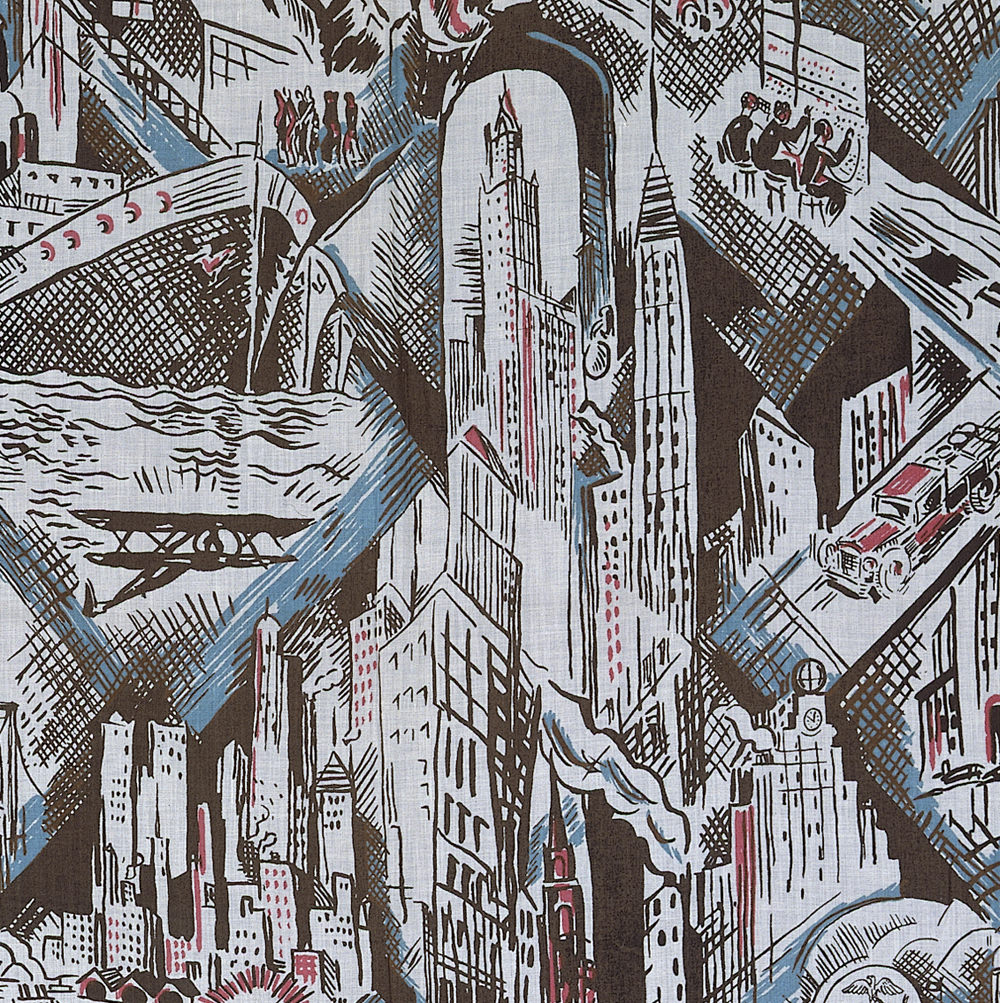
Block printed cotton by Ruth Reeves for WJ Sloane Ltd, New York, USA, about 1930. Museum no. T.57-1932

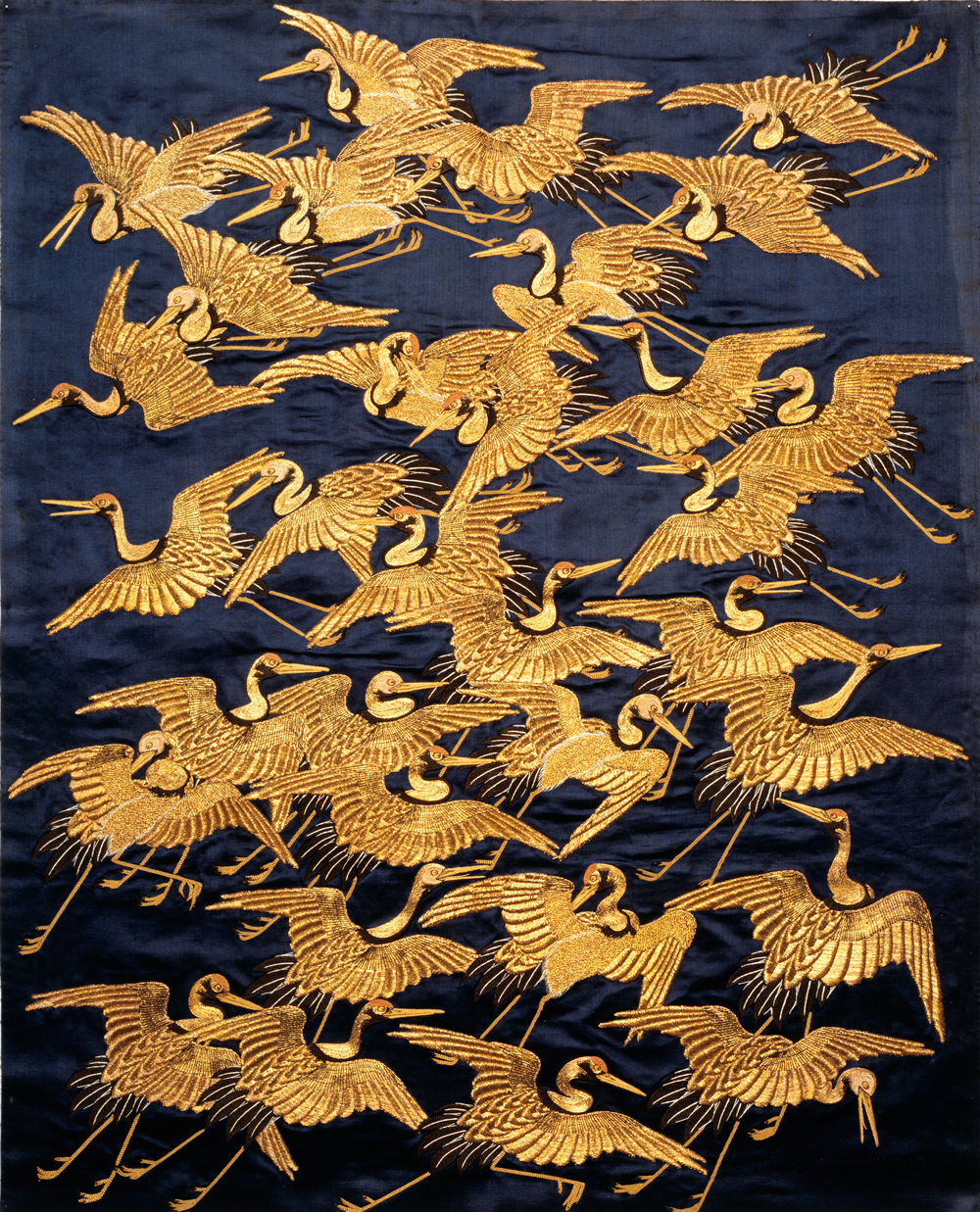
In China and Japan, Art Deco was also influenced. It was expressed through traditional materials. Their properties in Art Deco were: polished surfaces and colours such as the Chinese jade and Japanese Lacquer. They used geometric forms of East Asian.

Silk fukusa (gift cover) embroidered with a flight of cranes, Japan, 1800-50, Edo period. Museum no. T.20-1923

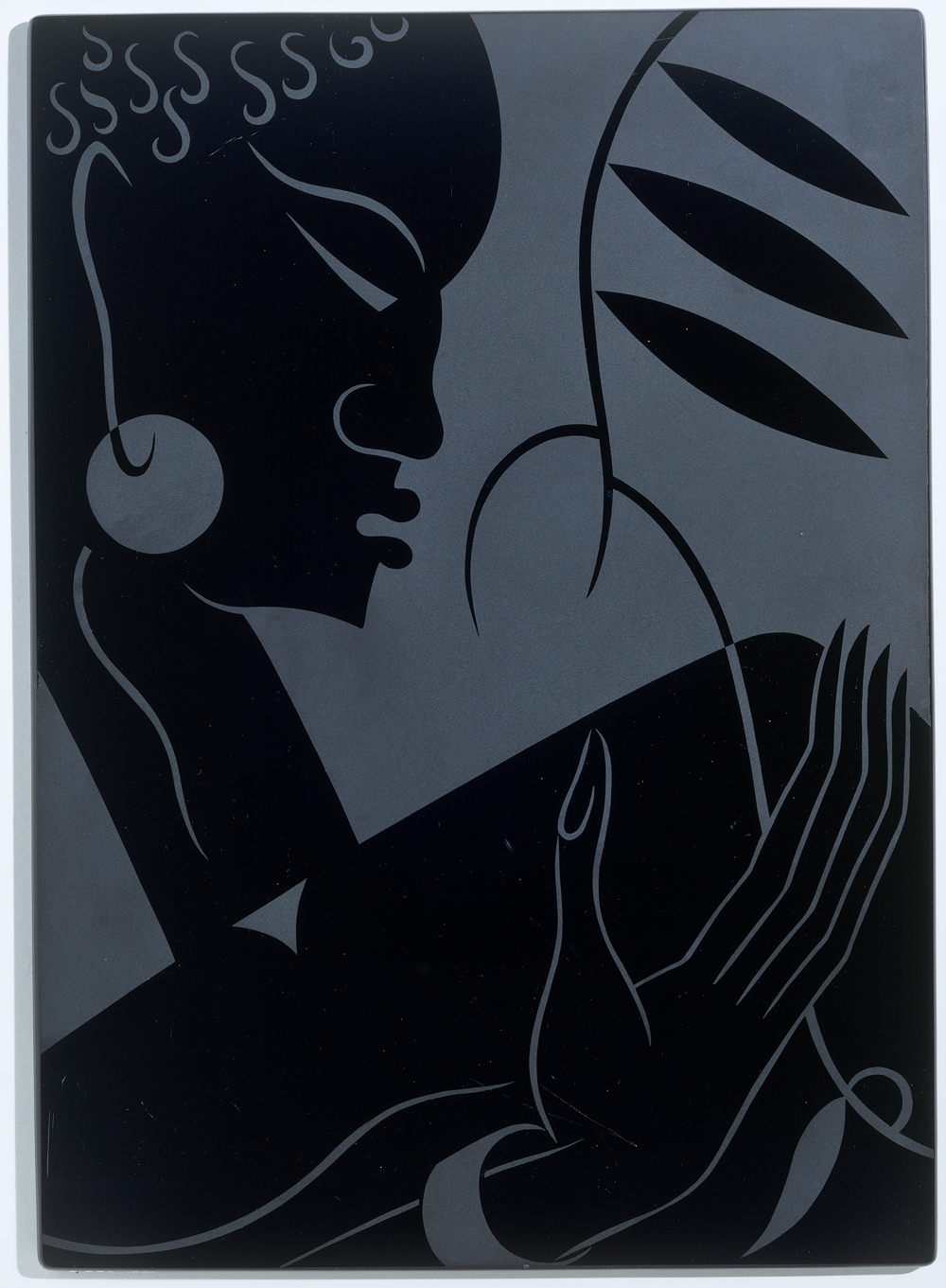
Art Deco was also in Africa, which was provided with the richest sources. They had bold, abstract, geometric zigzags, hatch marks, circles and triangles of African textiles. Jean Lambert-Rucki and Pierre Legrain were two African artists who produced African-inspired sculpture and furniture.


Sand-blasted glass panel by Sigmund Pollitzer for Pilkington Ltd, St Helens, Merseyside, UK, 1933-38. Museum no. C.230-1991


For example this Chrysler building which was built in 1928 was inspired from Art Deco. Art deco buildings which were from Art Deco usually had: Cubic forms, Ziggurat shapes: Terraced pyramid with each story smaller than the one below it,Complex groupings of rectangles or trapezoids, Bands of color, Zigzag designs, Strong sense of line and Illusion of pillars.


Art Deco designers used to draw on the art of Maya and Aztec to create different forms but North Americans and South Americans saw this particular art as something different than they used to do the


Europeans.


The image on the right top is from the film Great Gatsby because the film had Art Deco inspirations such as the clothes, building and era.


Art Deco's design were inspired from: Ancient Egyptian and Mayan civilizations, Tribal Art, Surrealism, Futurism, Neo-Classisism, Geometric Abstraction, Popular culture, Russian ballet companies and Modernists-Josef Hoffmann, Frank Lloyd and Adolf Loos.


Some of the materials that the Art Deco used were: Ivory, Enamel, Shagreen, Ebony and Mother of pearl.


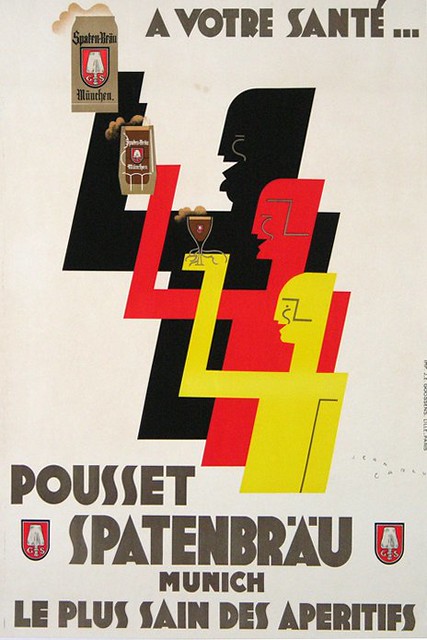
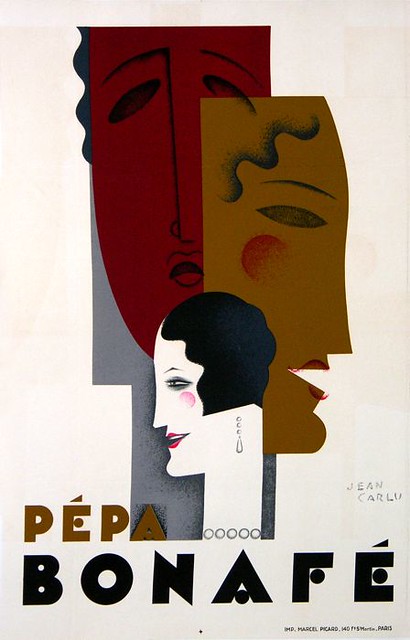
Jean Carlu

He was born in France in Bonnieres. He came from a family of architects. His early work was inspired from Cubism, as one can see from the geometric shapes that Picasso used to draw. He produced the latter in the US. In poster form, Cubism and Surrealism were under the influence of Andre Breton and Yves Tanguy. Some innovations were: The introduction of photomontage, the use of 3D elements in poster design and the use of electric lightbulbs in posters.


Bibliography: